

Eshe Sherley
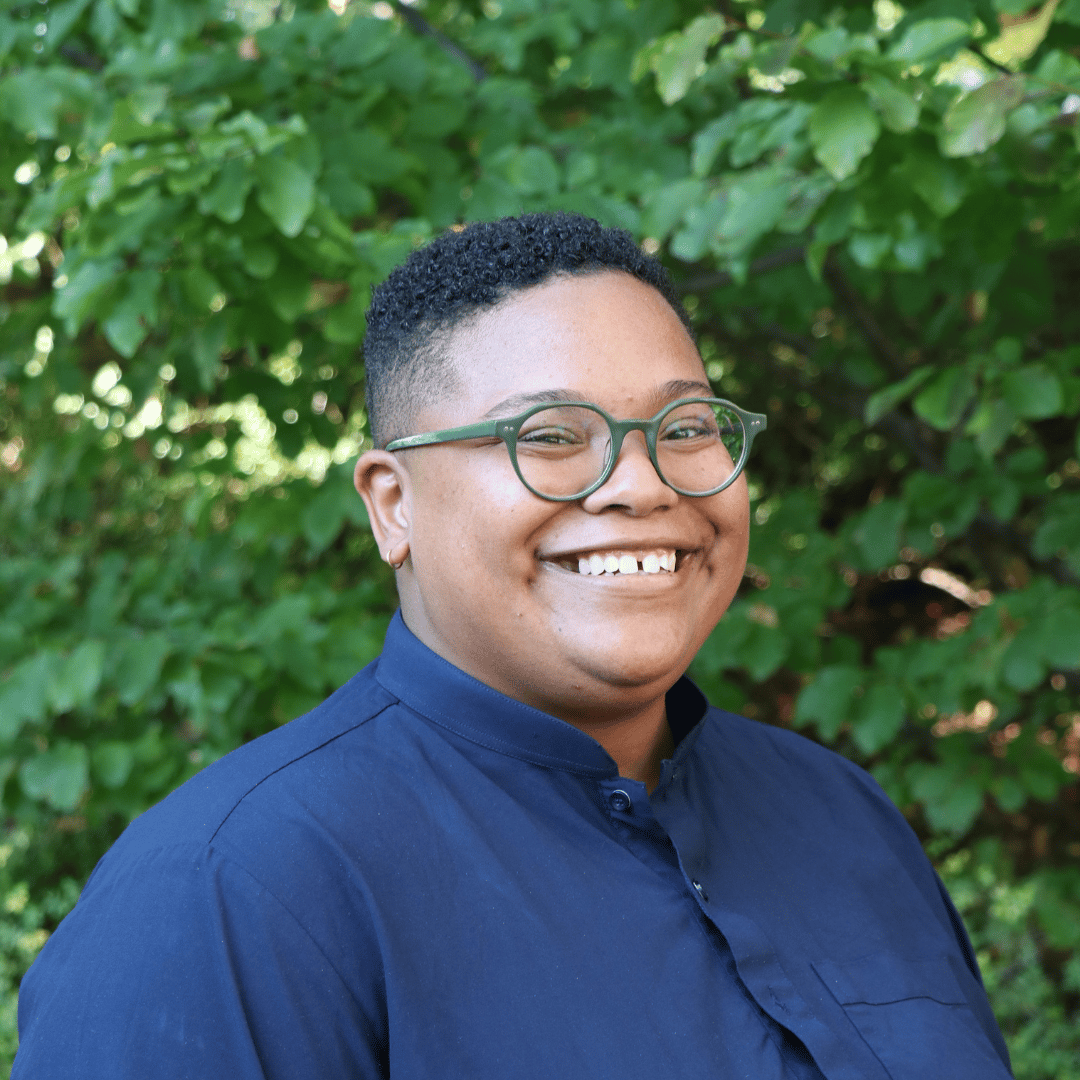
Assistant Professor, The Harriet Tubman Department of Women, Gender, and Sexuality Studies
Research Expertise
20th Century
African American/African Diaspora
Archival Research
Black Feminist Thought
Black Studies
Capitalism
Gender and Sexuality Studies
Labor
Oral History
Political Economy
Political History
Queer Of Color Critique
Social Change and Social Movements
Eshe Sherley is a historian of Black politics, gender, sexuality, and labor in the 20th century United States. She is an Assistant Professor of Black Feminisms in the Harriet Tubman Department of Women, Gender, and Sexuality Studies at the University of Maryland, College Park. Her work is publishing or forthcoming in Signs, Environment and Planning F, and TSQ.
Sherley is working on a monograph tentatively titled Care in Crisis: How Black Women Pioneered a Black Feminist Politics of Reproduction in Atlanta. Care in Crisis explores what activism and lives of working-poor Black women in Atlanta can teach scholars about care and the care economy. Following the political campaigns these women mounted, the forces that shaped their lives, and the strategies they developed to navigate Atlanta's changing care economy to understand the implications of Black women's organizing in the context of the rise of the Black Mecca. Her scholarships has been supported by the Care G. Woodson Institute for African American and African Studies, the Institue for Citizens and Scholars, the Center for Engaged Scholarship, and the Newhouse Center for the Humanities at Wellesley College.
She received a B.A. in African American Studies from Yale University and a PhD in History from the University of Michigan.
Publications
Ambivalence as a Feminist Project
Eshe Sherley's co-authored article was published in Signs in 2024.
Author/Lead: Eshe SherleyNon-ARHU Contributor(s): Emily Coccia (Carleton College), Lisa H. Harris (University of Michigan), Sara McClelland (University of Michigan), Cecilia Morales (Seattle University), Ava Purkiss (University of Michigan), Catherine Sanok (University of Michigan), and Valerie Traub (University of Michiganb)
Abstract
This essay argues that the concept of ambivalence could be leveraged as a feminist project with specific epistemological value for scholars across the humanities and social sciences. Curating its recent appearance across several areas of study, we suggest the potential of ambivalence as a feminist analytic. We argue that this analytic may help feminist scholars understand the complexity of texts, people, and social circumstances—both past and present—because it offers a conceptual category that holds space for conflicting emotions, contending historical phenomena, and overlapping affective, ethical, and political commitments. We see unique value for feminist scholarship when ambivalence is foregrounded; it asks us to consider important tensions and binaries between subjection and liberation, certainty and uncertainty, and skepticism and conviction. Reconceptualizing ambivalence as a capacity and structural condition (rather than an individual deficiency or failing), we render this concept legible for feminists across various fields and disciplines. We propose three principles that could guide its uptake in scholarship: troubling the subjection/liberation binary, elevating the value of uncertainty, and encouraging constructive ambivalence in the researcher themself. While mindful of the risks and limits of ambivalence, we encourage others to adopt ambivalence as an analytic in their own work, describing the specific gains to be had in affectively and epistemologically sitting with the contradictions and discomforts it reveals.